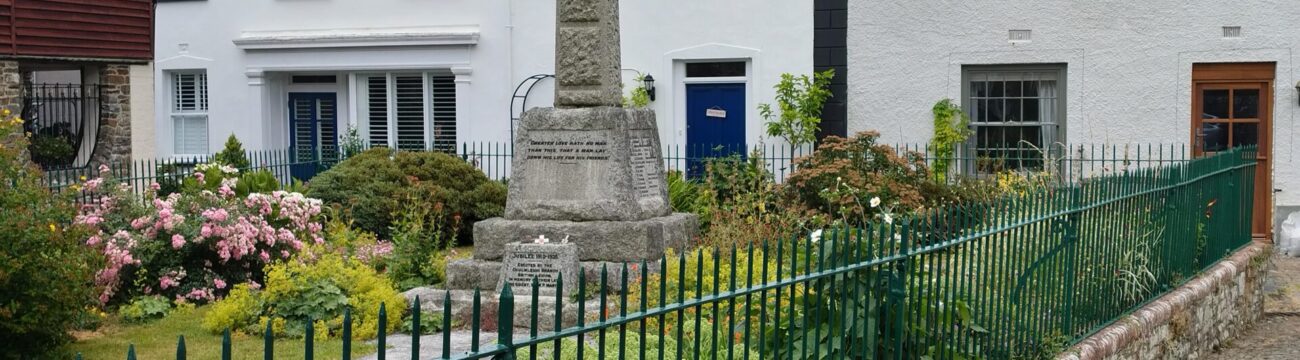
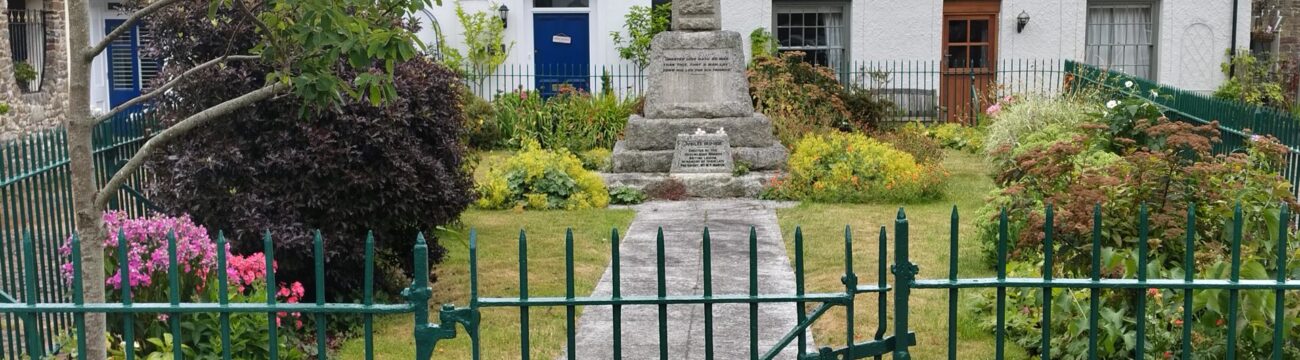
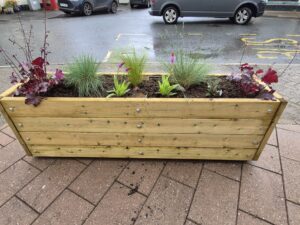
Newly planted flower box at Red Lion CornerThe second planter at Red Lion Corner
Winter Fuel Payment scams often start earlier than people think
Last year, criminals targeted UK adults between August and October, and this year is likely to be no different.
Most Winter Fuel Payments are made automatically, so you should not need to apply. You will never be asked to provide personal or banking details by text message or email.
🚨 What is a Data Breach and How Could It Affect You? 🚨
A data breach happens when information held by an organisation is accessed, stolen, or disclosed without permission. If you are a customer of that organisation, criminals may use information revealed in the breach to create convincing scam emails, text messages, and phone calls. They may already know details such as your name, address, date of birth, or email address.
⚠️ Remember: Someone knowing personal information about you does not prove they are genuine.
🚨 If an organisation you deal with suffers a data breach:
✅ Verify any information through official channels only. Visit the organisation’s website directly or use a telephone number you know is genuine.
✅ Do not click links or use contact details provided in unexpected emails, texts, or messages.
✅ Be cautious of anyone asking for personal information, passwords, PINs, bank details, or one-time security codes.
✅ If a password may have been exposed, change it immediately. If you use the same password elsewhere, change those too, especially for your email account.
AbilityNet – Free Technical Support for Older and Disabled People in Devon
Staying safe and secure online can sometimes feel challenging.
Do you:
Find it difficult to change your online passwords?
Feel unsure about setting up two-step verification?
Worry about keeping your phone, tablet, or computer up to date?
These are important steps that help protect you and your personal information.
If you are an older person, or a disabled person of any age, living in Devon, you may be able to access free technical support through AbilityNet.
AbilityNet is a UK charity, established in 1998, dedicated to helping older and disabled people get the most from their technology. For over 25 years, they have supported individuals with a wide range of digital needs and worked with organisations to make the digital world more accessible for everyone.
If you think you could benefit from their support, they may be able to help.
If this message doesn’t apply to you, please consider whether it could help a relative, friend, or someone in your local community.
Placing your Wi‑Fi router in a window or on a windowsill may seem convenient, but it can create security risks and poor performance.
🚫 Why you shouldn’t place your router in a window
Security risk
Routers often have stickers showing the Wi‑Fi name (SSID) and password. These can be seen or photographed from outside, allowing someone to access your network.
Overheating
Direct sunlight can cause your router to overheat, leading to slow speeds, dropouts, or permanent damage.
Wasted signal
Much of your Wi‑Fi signal will be broadcast outside your home instead of where you need it.
Interference from modern glass
Energy‑efficient windows can block or weaken Wi‑Fi signals.
✅ Top tips for better Wi‑Fi at home
Place it centrally
Position your router near the middle of your home for even coverage.
Raise it up
Put it on a shelf or table (around waist height or higher) for better signal spread.
Keep it visible
Avoid cupboards, cabinets, or behind TVs—these block signal and trap heat.
Keep away from interference
Place it at least a metre away from microwaves, cordless phones, and large metal objects.
Adjust antennas (if fitted)
Vertical = best for single floors
Mix vertical/horizontal = better for multi‑storey homes
🔐 Simple steps to improve security
Cover your router label
If it’s visible, place tape over the sticker showing your Wi‑Fi details.
Change default passwords
Update both your Wi‑Fi password and the router’s admin password.
Use a guest network
This lets visitors connect without accessing your personal devices.
Restart occasionally
Rebooting your router can improve performance and stability.
📍 If your router must be near an outside wall or close to a window
Place it slightly away from the window, ideally on a raised surface, rather than directly on the windowsill. Keep it away from direct sunlight. Ensure that any numbers or letters on the router cannot be seen or photographed by anyone outside the window.
👍 Key takeaway
A well‑placed and secured Wi-Fi router can:
Improve your internet speed
Reduce connection issues
Help protect your home network from unauthorised access
Many will be aware of the speedy ways you are able to report suspicious emails and text messages.
As a reminder –
Suspicious Texts can be forward to 7726 (it’s free and alerts mobile providers)
If you think you have lost money or given out sensitive financial information to scammers, immediately alert your bank. Call them right away to inform them of the suspicious incident. You can quickly reach many UK banks’ fraud departments by calling 159.
Please feel free to share this information.
Crime Stoppers
You’ve heard of us but do you really know what we do ?!
Did you know that 10 arrests are made across the UK daily because of 2000 reports that are made daily to Crimestoppers ? In the South West alone we have an average of 800 pieces of actionable information every month which we pass to the police.
Know something about a crime or a criminal but don’t want to go directly to the police ? We know that it can sometimes be difficult to come forward with information. You might have seen or heard something about a crime but don’t know what to do, or are scared to come forward. It’s easy to think there is nothing you can do, but we offer you a safe way to do this.
We will listen to you about any crime that you have information about.
We don’t record any personal details about you.
We pass information to the relevant authority without revealing your identity.
All of our call agents are trained to support you through the process.
In the 35 years that we have been running, no one has ever been identified after giving information. It is vital that we guarantee your anonymity because if your identity became known, our reputation would be seriously damaged.
Crimestoppers is not an emergency service andif you see a crime taking place you should ring 999 to report it immediately.
Starting on the 4th of December 2025, the City of London Police began the soft launch of REPORT FRAUD, a new service that replaces Action Fraud as the national platform for reporting cyber crime and fraud. Throughout December, Action Fraud began transitioning to REPORT FRAUD. Traffic to the old Action Fraud website was gradually redirected to REPORT FRAUD, helping to ensure a smooth transition for the public. The soft launch is now complete.
As from 1 April, you can recycle tetra packs, fruit cartons and crisp tubes in your brown bag.
What can be recycled in North Devon and where should items be placed?
Blue recycling box – glass
Glass bottles and jars. Pop the lids back on once you’ve rinsed them (even if they are metal!)
Black/green recycling box – plastics, tins and small electrical items
Small waste electrical and electronic equipment (WEEE) such as kettles, toasters and mobile phones. Loose cables (mobile phone and computer cables) can also be recycled. All items should be no larger than a standard-sized carrier bag
Mixed plastics including yoghurt pots, margarine tubs, plastic bottles and food trays, apart from black plastic which is not recyclable at the moment – squashed and lids replaced where possible
Food tins and drink cans
Aluminum foil
Aerosol cans
Kitchen and kerbside caddies – food only
All cooked food
All raw food
Bones and carcasses
Leftovers from plates
Tea bags and coffee grounds
Fruit and vegetables, including peelings
Egg shells
Please note we cannot accept anything other than food in your food caddy. Food waste in North Devon is processed by an Anaerobic Digestor and not composted so please don’t put other compostable items in your caddy
Brown bag – brown cardboard and brown paper
Corrugated cardboard
Cereal boxes and other cardboard food packaging
Toothpaste boxes
Toilet roll and kitchen roll cores
Cardboard egg boxes
Card sleeves (from food trays)
Brown paper and envelopes (windowed or non-windowed)
If you have a large quantity of cardboard, please call the team on 01271 327711 to arrange a free bulky cardboard collection.
The following items cannot be recycled and should be disposed of in your black wheelie or at your local recycling centre:
Large/rigid items such as washing baskets, water carriers, beer kegs, buckets, storage boxes in your recycling box, as these will damage our recycling machinery
Black plastic. Though the plastic may have a recycling symbol, it is not currently possible to effectively sort black plastic from other materials at a recycling facility
Shiny/glittery wrapping paper and cards. Unfortunately, they cannot be recycled in your kerbside collections or at your local recycling centre due to them often being dyed, laminated and/or containing non-paper additives. Please pop in your black bin.
Crisp tubes like Pringles. These containers are made up of composite material and foil-lined cardboard. It also has a plastic lid, a foil seal, and a metal base. All these different materials combined together means we cannot recycle them. Please pop in your black bin.
Plastic food wrappers – such as clingfilm, crisp packets, sweet wrappers
Batteries and vapes. We DO NOT collect batteries and vapes in your recycling collections due to the risk of fires taking place in our lorries and recycling hall. If you missed the message, please get on board now. You can recycle these items at your local recycling centre or supermarket instead.
Scroll down to read about Chulmleigh.
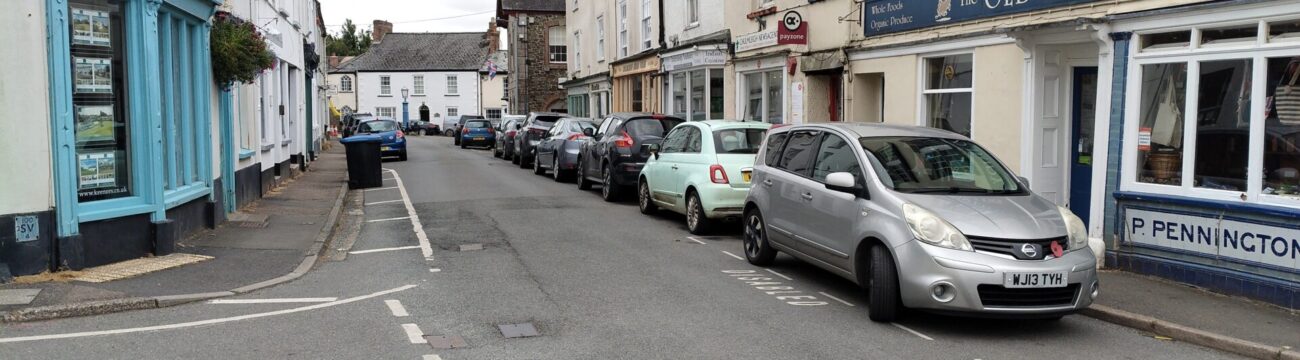
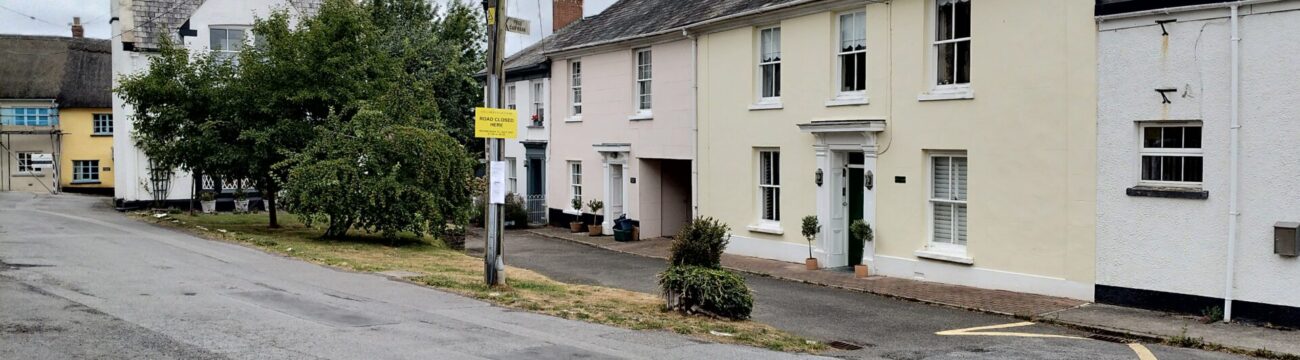
Chulmleigh, no ordinary town
Chulmleigh sits on the edge of the Little Dart river valley and although this is primarily an agricultural and farming community there are a number of independent shops and businesses based in this small town that is Chulmleigh – that thinks it’s a village.
Chulmleigh is a hill-top market town and at one time one was on the main road between Barnstaple and Exeter enabling it to prosper from trade in both directions. This ensured such a degree of prosperity that up to 18 public houses served the needs of the obviously thirsty residents and passing traders. Today only two of these remain!
Wool provided the main source of wealth and income to the town until around the middle of the 18th century when the wool trade suffered a decline. This, combined with the construction of the Exeter to Barnstaple turnpike road and a new railway along the same route brought about a slow decline in the fortunes of Chulmleigh.
The town slowly recovered during the 20th century so that today there are a number of small shops and businesses to meet local needs. Unfortunately, the recent economic recession has seen the closure of many shops and their premises being converted to various types of offices, but the shops and other businesses are slowly coming back, largely encouraged by the growth in housing which is bringing in many new residents, and the newly completed expansion of the Community College. Over the years the economic rise and fall of the town has been a part of the life, concern and work of the Parish Council.
Chulmleigh Parish Council, a brief introduction
This website will provide you with details of our twelve current councillors and the latest information about the work of the Council. The Council meets regularly, usually on the first Wednesday evening of the month, at7.00pm at Chulmleigh Town Hall. Members of the public are welcome to attend and speak at any meeting of the Council and there is an agenda item for public session participation at the beginning of each Council meeting. Chulmleigh Parish Council welcomes feedback from parishioners; details of how to contact the Clerk and individual Councillors are posted on this website.
Chulmleigh Parish Council, the role of a councillor.
The level of elected government that is closest to the local community is the parish council. One step up is the district authority (North Devon District Council) who consult regularly with the parish on matters related to their area. Planning applications are usually determined by the NDDC after the parish council has made recommendations.
It is mandatary for every councillor to sign a nationally recognised Code of Conduct before taking office.
The Code states that all councillor should have regard to the ten Principles of Public Life, namely Selflessness, Honesty and Integrity, Objectivity, Accountability, Openness, Personal judgement, Respect for others, Stewardship and Leadership.
Interests that relate to their public duties must be declared.
This role can often be very demanding and difficult. The parish council is rightly recognised as the first port of call for people with local concerns or ideas. Living in the town and being close to the residents is essential for a parish councillor who has been elected (or co-opted) to serve the local population and to make decisionson behalf of the people, while also taking into account the legal boundaries in which they work.